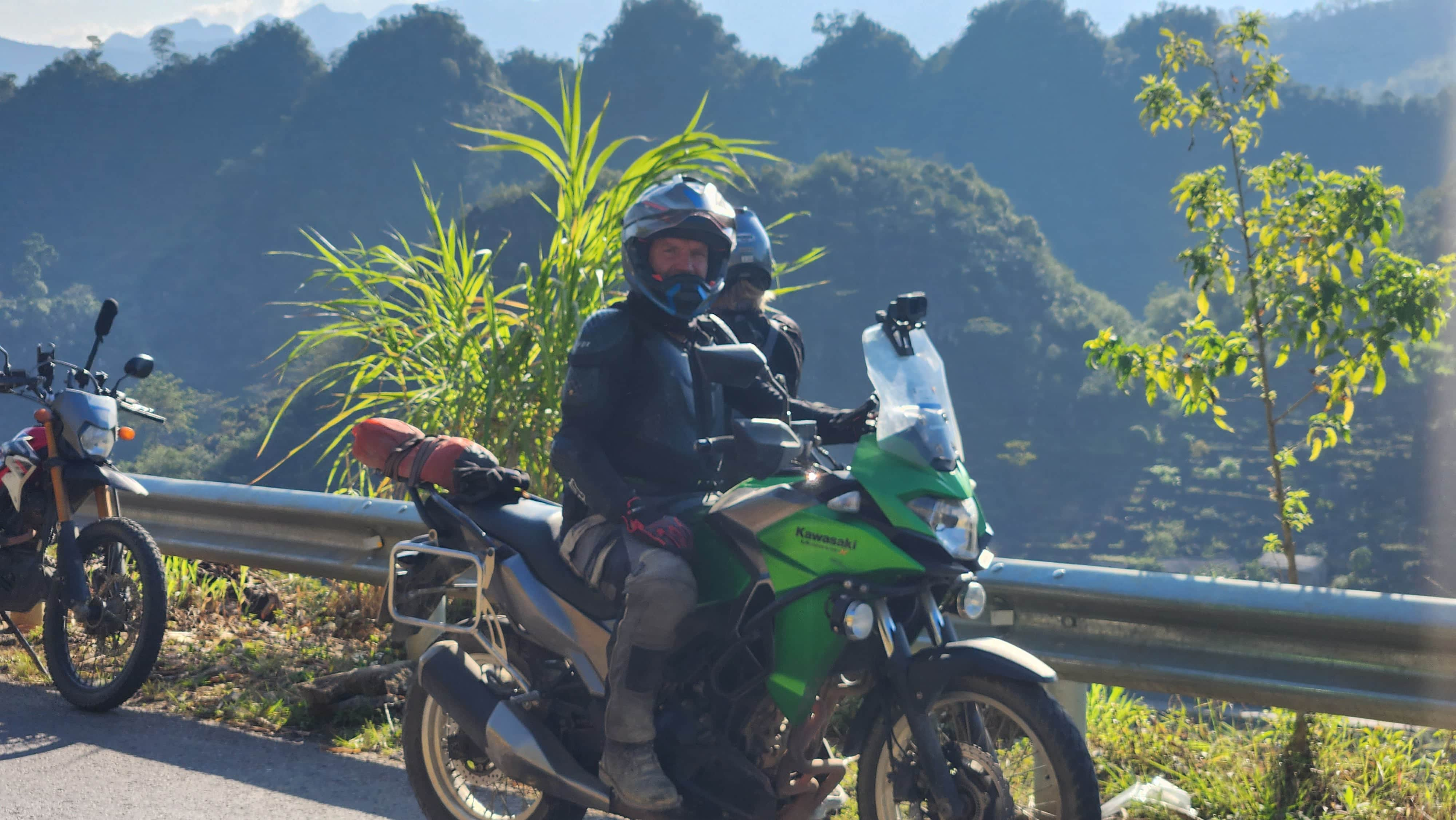
Here is how to choose suitable bags, use luggage straps and avoid common packing mistakes when riding in Vietnam.
Start with the Right Bag and Load
Before choosing straps, check whether your luggage fits the motorcycle. A large backpack may fit on a rack but still extend too far, reduce passenger space or make the motorcycle harder to balance.
Follow the load limits specified for the motorcycle, luggage rack and bags. The motorcycle’s carrying capacity includes the rider, passenger, luggage and accessories—not just the bag on the back.
Place heavier items low and close to the motorcycle’s centre, using the luggage system as intended. Keep side bags balanced and avoid stacking heavy luggage high behind the seat.
For a motorbike rental in Vietnam, ask the rental team to show you the recommended luggage arrangement before departure.
Use Luggage Straps as the Main Fastening
Purpose-made motorcycle luggage straps provide a more controlled hold than stretchy cords. Choose straps with suitable load ratings, reliable buckles and no cuts, fraying or damaged stitching.
To secure a bag:
1. Position it on a suitable support. Use the rack or designated luggage area, keeping the rider and passenger space clear.
2. Attach the straps to appropriate anchor points. Follow the motorcycle or rack manufacturer’s guidance. Avoid indicators, cables, plastic panels and other unsuitable parts.
3. Restrain movement in every direction. Route the straps so the bag cannot slide sideways, forwards or backwards.
4. Tighten evenly. Keep the bag stable without damaging its contents, the buckles or the rack.
5. Secure every loose strap end. Nothing should hang near moving parts or hot surfaces.
6. Push and pull the bag firmly after fastening it. If it shifts independently of the motorcycle, adjust the position and straps before riding.
Video khách/nv đang buộc đồ cho khách
Bungee Cords: Useful for Light Items
Bungee cords are convenient for holding small, lightweight extras, but they stretch and allow movement. Hooks can also come loose or recoil when a cord is released.
Do not rely on bungee cords as the only fastening for a heavy backpack or main travel bag.
If you use them, inspect the elastic and hooks, avoid overstretching and keep your face away from the recoil path. Attach them only to suitable points and check that they cannot slip free.
Use a properly fitted luggage system and suitable straps for the main load. Treat bungee cords as a supplementary option for light items.
Dry Bags Keep Gear Dry—Straps Keep It Secure
A waterproof dry bag can help protect clothing and personal belongings from rain and road spray. However, waterproofing and load security are separate jobs: the bag still needs proper attachment to the motorcycle.
Choose a size that fits the luggage area without excessive overhang. Close the roll-top according to the manufacturer’s instructions, leaving enough space to make the required folds.
Do not assume that carrying handles, closure buckles or small attachment loops are designed to restrain the whole load. Use the bag’s designated mounting system or suitable straps routed around it.
For electronics and important documents, an additional waterproof inner pouch provides a useful extra layer of protection.
How to Carry a Backpack on a Motorcycle
If you are using a backpack as motorcycle luggage, secure all shoulder straps, the waist belt and loose adjustment straps before loading it. These can hang down or work loose while riding.
Position the backpack on a suitable rack or luggage platform and fasten it so the contents cannot shift the load out of place. Avoid relying on the top carrying handle as the sole attachment point.
A rain cover does not secure the backpack and may flap or come off unless properly retained. Keep it away from the exhaust and moving parts.
If the backpack is too large to fit securely, repack into smaller compatible bags or arrange separate luggage storage or transport. Adding more cords does not solve an oversized load.
Common Motorcycle Luggage Mistakes
Before heading out, check for these avoidable problems:
- Too much weight at the rear: A high or rearward load can affect balance and handling.
- Loose shoulder straps or cord ends: These can reach the wheel, chain or other moving parts.
- Bags near the exhaust: Heat can damage luggage and its contents.
- Blocked lights or number plate: Keep them visible.
- Restricted rider or passenger movement: Leave room to sit comfortably and operate the motorcycle.
- Uneven side bags: Distribute the load sensibly and stay within the luggage system’s limits.
- Only checking the straps once: Bags can settle and straps may need adjustment during the ride.
Keep rain gear and other daytime essentials accessible so you do not have to undo the entire load at every stop.
Check Your Luggage Before and During the Ride
With the motorcycle safely supported, check that the luggage is stable and does not interfere with steering, controls or seating. Confirm adequate clearance from hot and moving parts, allowing for suspension movement.
Take a short, low-speed test ride in a suitable place to assess the loaded motorcycle. Stop and recheck the fastening after the first few kilometres, then at regular breaks and after rough sections.
If the load shifts or the motorcycle feels unstable, stop somewhere safe and correct the problem before continuing.
Whether you are joining a motorcycle tour or travelling independently in Vietnam, a few minutes spent packing and checking your luggage can make each riding day easier.
Pack light, secure every strap and give the road your full attention.