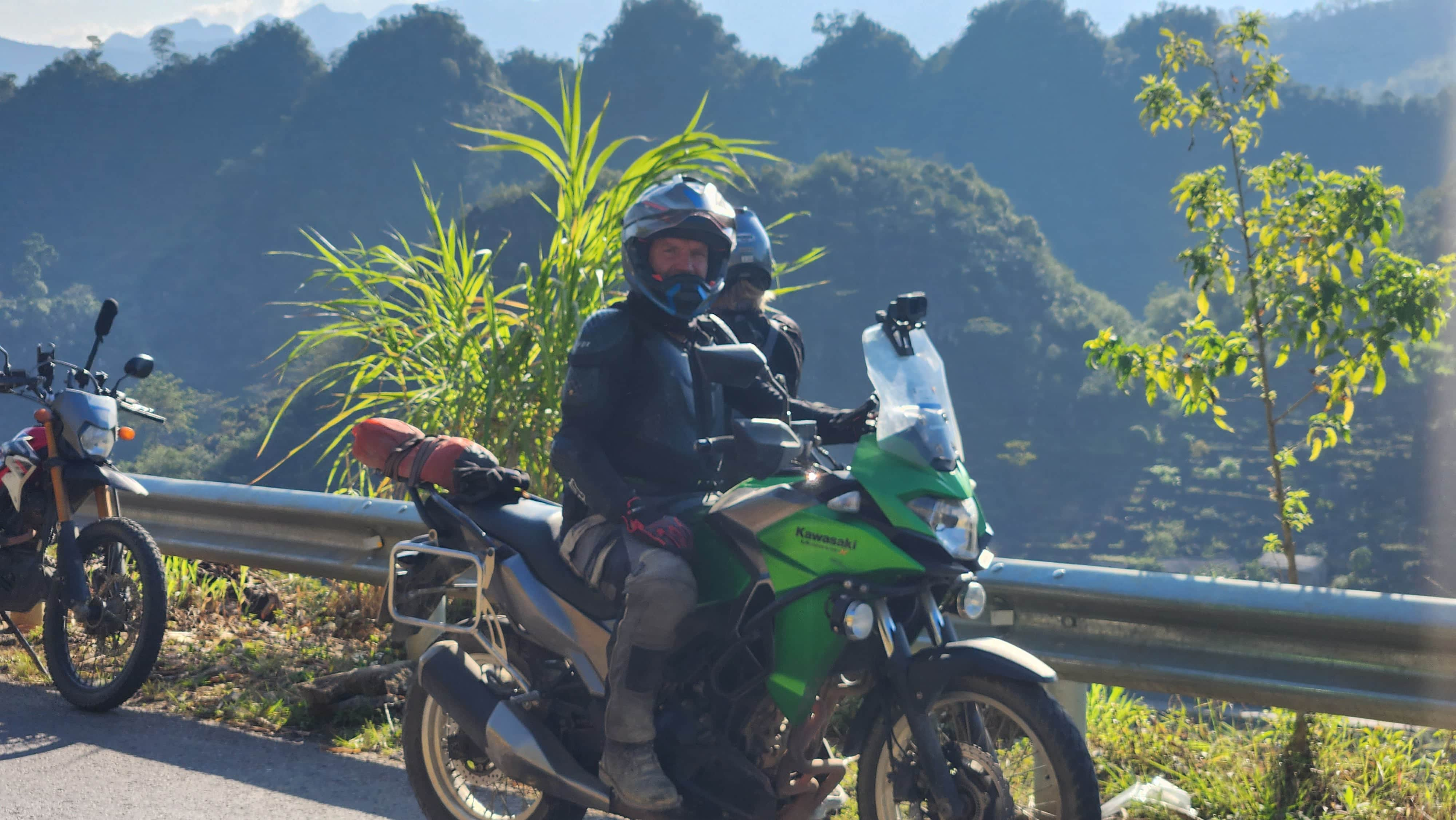
A calm approach, accessible documents and an understanding of local traffic rules will help you handle a stop confidently.
1. What Should You Do When Police Signal You to Stop?
Being stopped does not necessarily mean you have committed an offence. Traffic police may stop vehicles after observing a violation or as part of an authorised checkpoint or inspection.
When signalled to stop:
-
Slow down gradually, check behind you and avoid sudden braking.
-
Pull into the indicated position, keeping clear of moving traffic.
-
Once safely stopped, switch off the engine and prepare your documents.
-
Listen politely and present the documents requested.
-
Ask for clarification if you do not understand an instruction.
Do not make a sudden U-turn, accelerate away or attempt to pass through the checkpoint. If you are travelling in a group, other riders should wait somewhere safe without blocking the road.
Keep your documents in an accessible waterproof pouch, along with your rental company’s contact details. For the full document requirements, see International Driving Permit (IDP) in Vietnam.

2. What If You Do Not Speak Vietnamese?
Once safely stopped, you can use a translation app or ask to call your guide or rental company for language support.
These phrases may help:
|
English |
Vietnamese |
|---|---|
|
Could you please explain why I was stopped? |
Anh/chị có thể giải thích lý do tôi bị dừng xe không? |
|
I don’t understand. Could you please speak more slowly? |
Tôi chưa hiểu. Anh/chị có thể nói chậm hơn không? |
|
May I call my rental company to help translate? |
Tôi có thể gọi bên cho thuê xe để hỗ trợ phiên dịch không? |
|
Could you please explain the official payment procedure? |
Anh/chị có thể hướng dẫn thủ tục nộp phạt chính thức không? |
If you are asked to sign a document you do not understand, request an explanation or translation first. Check your personal details, the motorcycle’s registration number and the recorded information. If something appears incorrect, explain your concern calmly and ask for it to be reviewed and recorded appropriately.
3. Which Traffic Rules Should You Pay Particular Attention To?
Ride on the Right and Follow Lane Markings
Vietnam drives on the right. Follow road signs, lane markings and instructions from traffic officers. Do not ride against the traffic flow or enter expressways where motorcycles are prohibited.
Another rider’s actions are not a guide to what is permitted. Navigation apps can also make mistakes—always follow the signs on the road.
Do Not Assume You Can Turn Right on Red
Only turn when the applicable traffic signal, sign or officer’s instruction allows it. Otherwise, stop and wait. When a turn is permitted, check carefully and give way as required.
Watch for Changing Speed Limits
Speed limits depend on the vehicle, road type, location and posted signs. Do not use one assumed limit for your entire journey, and pay attention when entering built-up areas.
Keep Alcohol Out of Your Riding Day
Vietnam prohibits driving with alcohol in your blood or breath. Do not assume that a small amount is permitted. If you have been drinking, use another form of transport and comply with any testing instructions.
Wear and Fasten Your Helmet Properly
Both riders and passengers must wear helmets as required by law. Before setting off, check that yours fits securely and that the chin strap is properly fastened.
Stop Safely Before Using Your Phone
Do not hold and use a phone while riding. Pull over somewhere safe and legal before changing your route, messaging or taking photographs.
Use Your Lights at the Right Time
Use your front lights between 6 pm and 6 am, and whenever fog, rain or other conditions reduce visibility. Use dipped headlights where required to avoid dazzling other road users.

4. What Should You Do If You Receive a Fine?
Ask calmly for an explanation of the offence, the relevant paperwork and the next steps. Avoid relying on stories about special “tourist fines” or fixed amounts in US dollars or euros.
Follow the official payment procedure, check the details on the penalty decision and keep your receipt or payment confirmation. Electronic payment options may depend on the case and your access to the relevant service, so ask for instructions.
Do not offer an unofficial payment. If your documents or motorcycle are temporarily retained, ask why, obtain the relevant paperwork and contact your rental company promptly.
Your guide or rental team can help with communication and arrangements involving the motorcycle. They cannot override a decision made by the authorities.
5. Prepare Before Each Day’s Ride
Take a few minutes to check the lights, brakes, tyres, mirrors and luggage straps. Review your route, rest stops and the weather, allowing enough time to avoid rushing.
When travelling in a group, agree on a safe meeting point in case anyone becomes separated. Never run a red light or overtake unsafely just to keep up.
Keep your phone charged and your support contact details accessible. For accident-related cover and claims preparation, see Motorbike Travel Insurance in Vietnam.